

Introduction The Xperia 1 VIII
For the past few years, Sony's Xperia 1 line has been walking a tightrope, beloved by a passionate niche of photographers and audiophiles, yet unable to break into the mainstream dominated by Samsung, Apple, and increasingly aggressive Chinese brands. With the Xperia 1 VIII, announced on May 12, 2026, Sony seems to have decided it's time to stop tiptoeing and make a real statement. This is the most visually and technically transformed Xperia in recent memory. The iconic vertical camera strip is gone, replaced by an angular square camera island. The software now includes an AI Camera Assistant aimed at beginners. And the telephoto system has received what is arguably the biggest single-generation sensor upgrade in Xperia history. The question is whether these changes are enough to justify a price tag that starts at £1,399 in the UK and €1,499 across Europe, and whether Sony's faithful audience will follow it in this new direction.
Design & Build: The "ORE" Era Begins
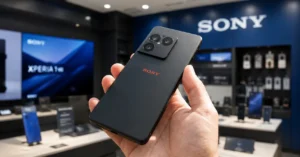
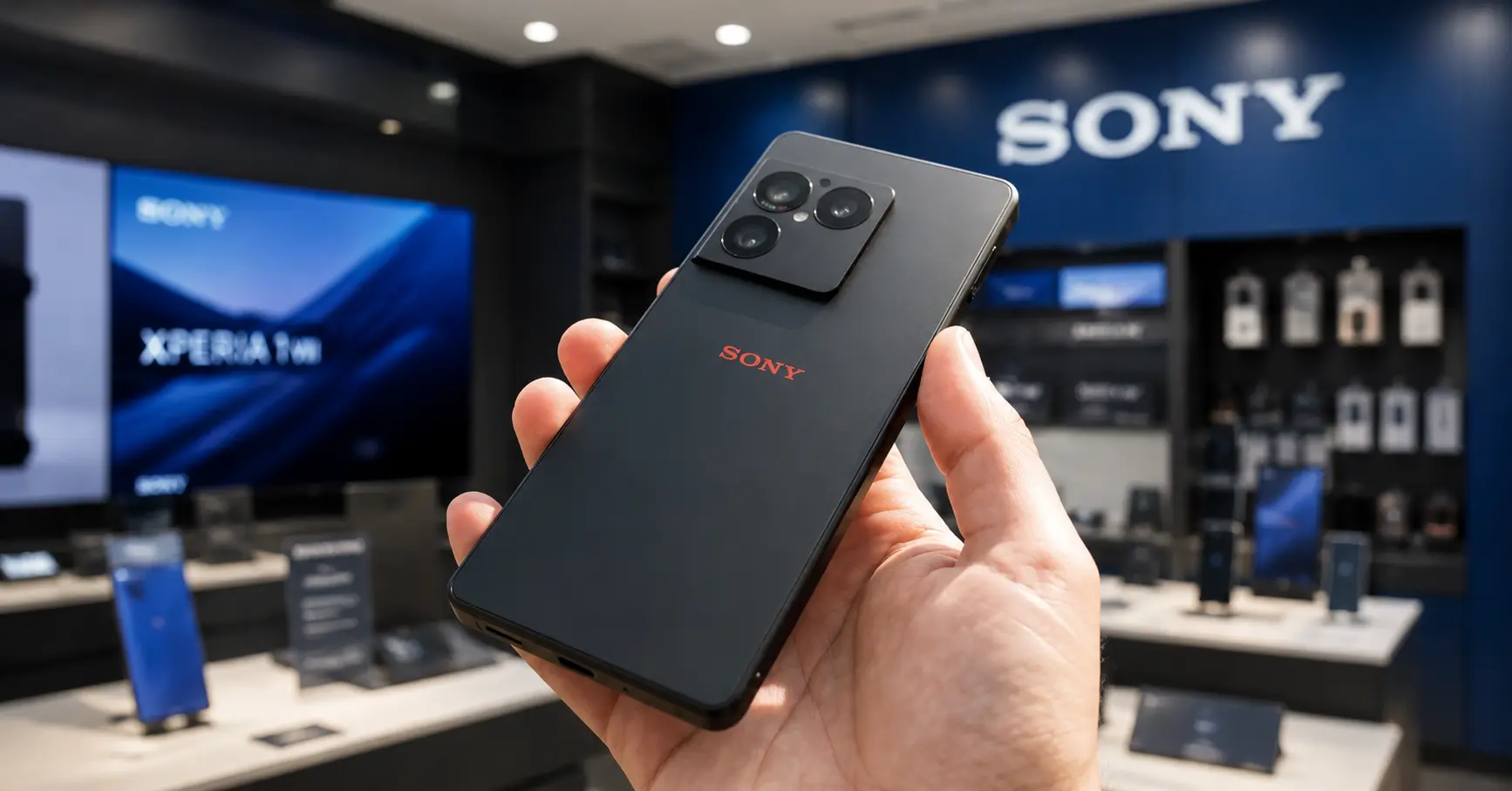
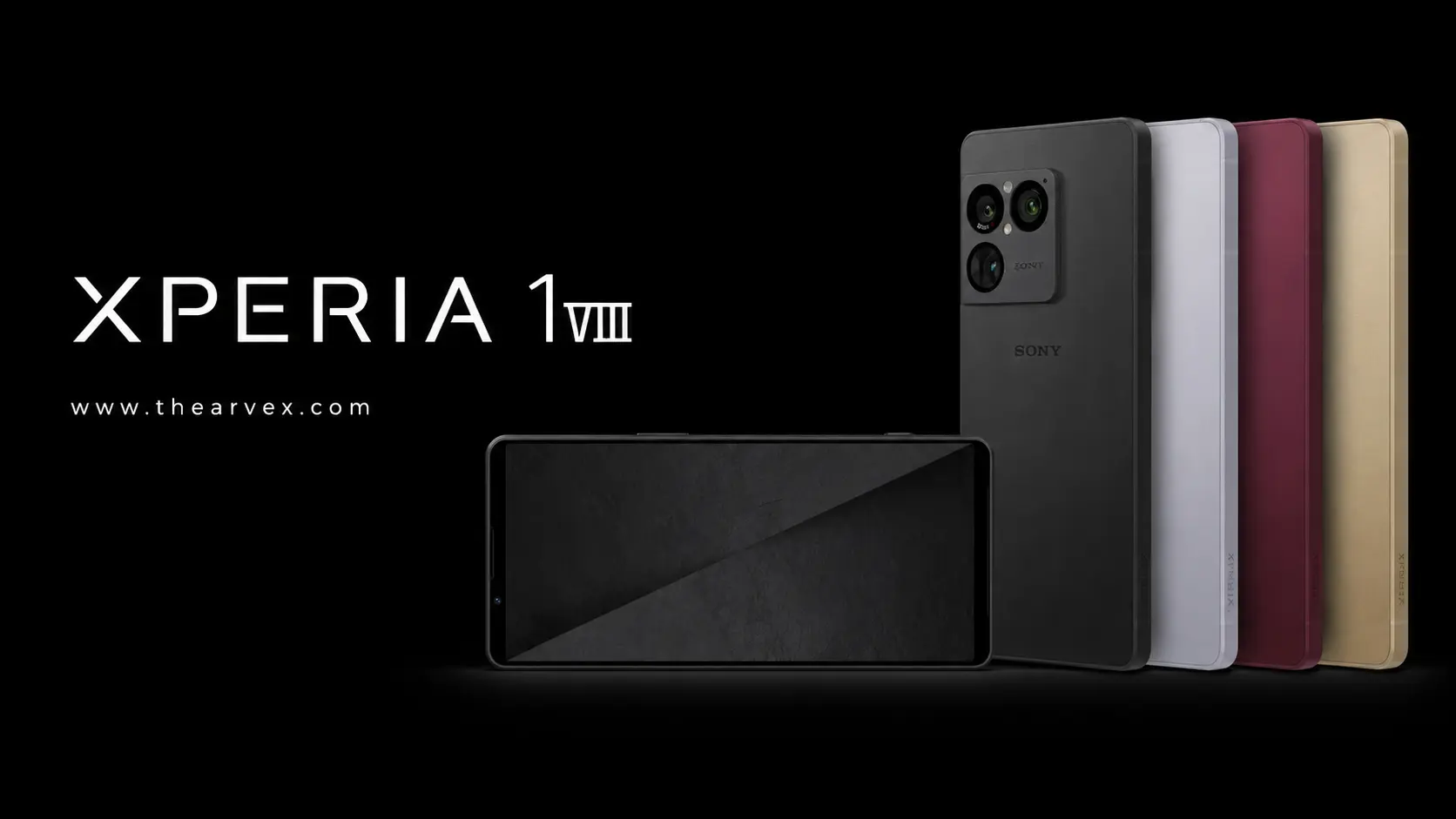
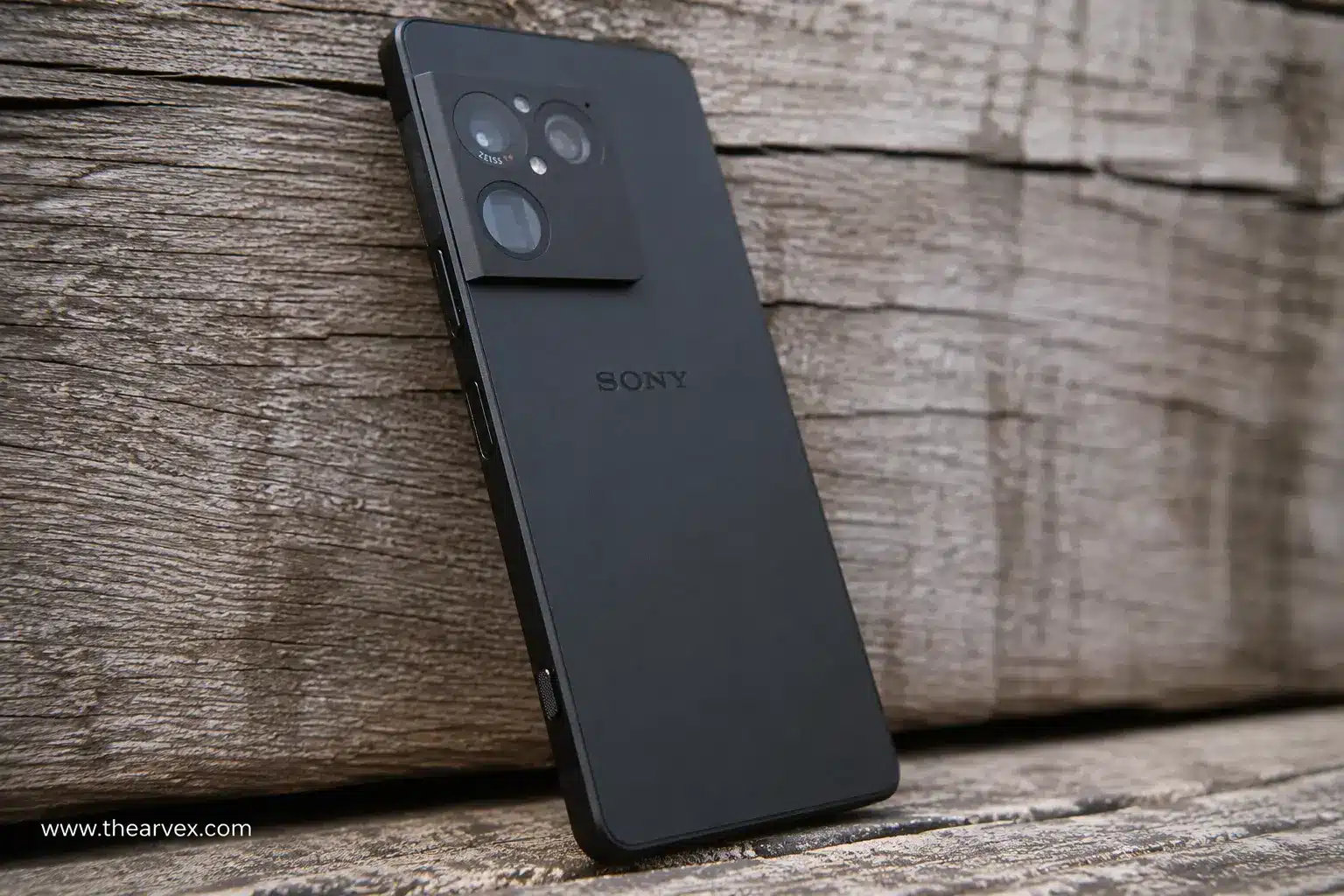
The Xperia 1 VIII ditches the traffic light vertical camera arrangement that defined every Xperia 1 for years. In its place sits a square-shaped module tucked toward the upper-left corner of the rear, with an angled rail sloping down the frame, a look that draws obvious inspiration from the Google Pixel camera bar while maintaining its own angular character. Sony calls this new design language "ORE," inspired by rough stone textures, and the back panel of the phone carries a tactile, almost matte-rock finish that provides genuine grip without requiring a case. Color options include Graphite Black, Iolite Silver, Garnet Red, and the exclusive Native Gold, the latter available only in the 1TB storage tier and only through Sony's official store. All four colorways carry the ORE texture. The phone measures 8.3mm thick and weighs 200g, making it slightly heavier and thicker than its predecessor, though the added heft is easy to forgive given the battery and camera upgrades housed inside. The signature Xperia details are preserved: front-facing stereo speakers, a taller-than-usual 19.5:9 aspect ratio display, and the beloved dedicated two-stage physical shutter button on the right rail.
This smartphone features a 6.5-inch LTPO OLED display with FHD+ (1080 × 2340) resolution for clear visuals. It is powered by the Snapdragon 8 Elite Gen 5 processor for smooth and fast performance. The device comes with 12GB to 16GB RAM and offers storage up to 1TB. A 5,000mAh battery keeps it running, with support for 30W wired charging and 15W wireless charging. It runs on Android 16 and is expected to launch on June 19, 2026.
Display: Familiar, but That's Not a Criticism
The 6.5-inch LTPO OLED panel runs at FHD+ (1080×2340) resolution with a 120Hz adaptive refresh rate. Crucially, Sony has moved away from the 4K panel of older Xperia 1 models, a controversial trade-off that the company has leaned into in recent generations. In everyday use, the FHD+ display is sharp, vibrant, and power-efficient. Dropping to 4K would have been noticeable only on a handful of use cases, and eliminating it meaningfully improves battery life. HDR content looks outstanding, and the tall aspect ratio remains one of the best on the market for cinematic video consumption.
Camera System: The Telephoto Transformation
This is where the Xperia 1 VIII earns its biggest headlines. The rear triple-camera setup now includes a revamped telephoto lens built around a 48-megapixel sensor on a dramatically larger 1/1.58-inch sensor, a massive step up from the 12-megapixel, 1/3. 5-inch unit found on the Xperia 1 VII. The ultrawide and main cameras each feature 16mm and 24mm equivalents, respectively, and Sony states that all three cameras are engineered to deliver low-light performance comparable to a full-frame sensor in terms of noise reduction and dynamic range.
The trade-off is minimum focus distance: the new telephoto bottoms out at 15 cm, compared to the astonishing 4 cm macro capability of the Xperia 1 VII. In practice, however, the new system doesn't require a separate macro mode; autofocus just works fluidly at distances that would have previously demanded a mode switch. Sony has also enhanced its RAW multi-frame processing at the sensor level, producing richer dynamic range in challenging lighting.
AI Camera Assistant
Arguably, the most philosophically interesting addition is the AI Camera Assistant, a departure for a phone line that has traditionally catered to manual-control enthusiasts. The feature analyzes scenes in real time and suggests actions like switching lenses, enabling portrait mode, or applying a filter. Advanced users can disable it entirely. For casual users upgrading from a mid-range phone, it could genuinely accelerate the learning curve. Sony is clearly trying to widen its audience without alienating its core base, and the on/off toggle is a smart concession.
Performance & Battery
The Snapdragon 8 Elite Gen 5 handles everything the Xperia 1 VIII asks of it without breaking a sweat. Gaming, 4K video editing, and multi-app workflows are seamless. The real-world story is the battery. GSM Arena's standardized battery test places the Xperia 1 VIII at 17 hours and 47 minutes of active use, up significantly from the 15 hours and 32 minutes recorded for the Xperia 1 VII. Sony's new "Processing Optimization" software feature further extends runtime by throttling power draw in map and navigation apps.
The sticking point remains charging. At 30W wired and 15W wireless rates, unchanged for four consecutive years, the Xperia 1 VIII looks dated next to 2026 flagships charging at 65W or faster. It's a deliberate trade-off Sony makes to protect long-term battery health, but users who regularly need a quick top-up will feel the gap keenly.
Software & Connectivity
The phone ships with Android 16, and Sony promises four major OS upgrades. That falls short of competitors like Samsung and Google, who now offer seven years of updates, a gap that is increasingly hard to overlook at this price point. Connectivity is thoroughly modern: Wi-Fi 7, Bluetooth 5.4, NFC, and full 5G sub-6 GHz and mmWave support. The microSDXC card slot survives (shared with one SIM position), making the Xperia 1 VIII one of very few 2026 flagships to still offer expandable storage, a feature that will matter enormously to photographers and videographers.
Pricing, Availability & US Market Status
Pre-orders opened on May 13, 2026, across Europe and select Asian markets, with shipping beginning June 19, 2026. Pricing starts at €1,499 / £1,399 for the 256GB model, rising to €1,999 / £1,849 for the 1TB Native Gold variant sold exclusively through Sony's store. Every qualifying pre-order includes a complimentary pair of Sony WH-1000XM6 noise-canceling headphones, a bundle worth approximately €350 on its own, which softens the premium somewhat. There is no US release planned. Sony has not launched an Xperia flagship in the United States since 2023, and IMEI certification data indicates no change in strategy for this generation.
An ambitious, distinctive flagship with a genuinely impressive camera leap. Held back by slow charging, limited OS support, and no US availability.
Article information sourced from Sony's official May 2026 announcement, GSMArena, Android Authority, Tech Advisor, and 9to5Google. Specifications verified as of May 14, 2026.