

Apple iphone lawsuit Settlement
The Apple iPhone lawsuit settlement has become one of the most talked-about legal disputes in the technology industry, raising major questions about how companies market artificial intelligence features to consumers. Apple agreed to settle a high-profile class action lawsuit tied to claims that the company promoted advanced Siri and Apple Intelligence capabilities before those features were fully available on supported iPhones. The case drew widespread attention because it involved one of the world’s most valuable companies at a time when AI has become the center of smartphone competition.
The lawsuit focused on Apple Intelligence, the artificial intelligence platform Apple introduced during its Worldwide Developers Conference in 2024. During the event, Apple showcased a significantly upgraded version of Siri capable of understanding personal context, interacting across applications, and handling more advanced voice commands using on device AI processing. Those demonstrations quickly became a key part of Apple’s marketing campaign for the iPhone 16 series and select iPhone 15 Pro models.Consumers later argued that the company created the impression that many of those advanced Siri features would be available immediately when the devices launched. Instead, several of the most heavily promoted capabilities were delayed for months. Plaintiffs in the lawsuit claimed Apple’s advertising encouraged customers to purchase expensive new iPhones based on functionality that was not actually accessible at launch.
What Triggered the Apple iPhone Lawsuit Settlement
The legal dispute emerged after users discovered that several AI driven Siri features shown during Apple presentations were missing from the initial software rollout. Although Apple released some Apple Intelligence tools through software updates, the more advanced contextual Siri functions remained unavailable longer than many buyers expected.
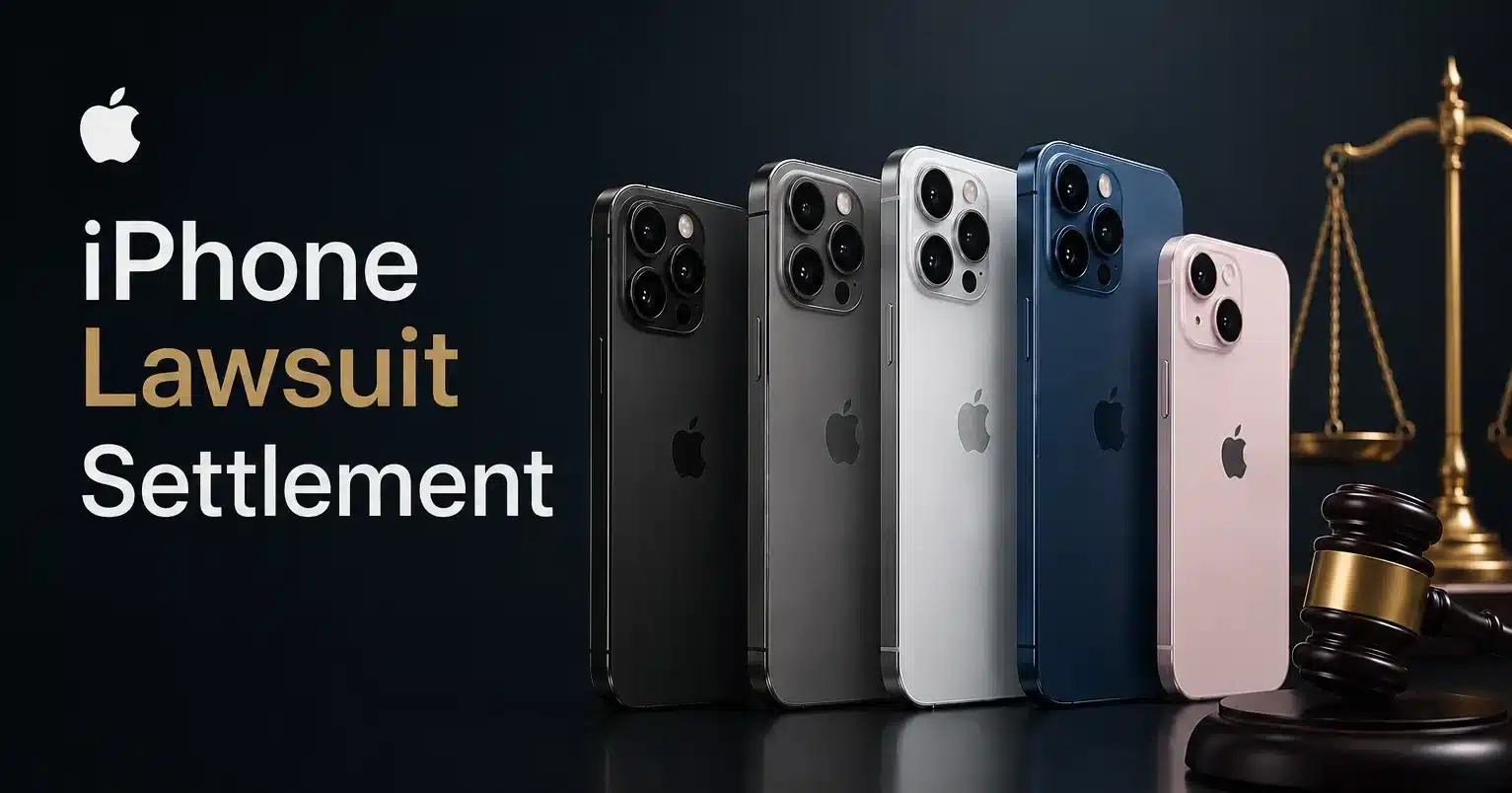
The lawsuit argued that Apple blurred the line between future product previews and active product capabilities. According to reports published in 2026, the settlement reached approximately $250 million, making it one of the most significant consumer-focused AI advertising settlements in the smartphone industry. In practical terms, the Apple iPhone lawsuit settlement means that eligible customers who purchased certain iPhone 15 Pro, iPhone 15 Pro Max, or iPhone 16 models in the United States may qualify for compensation because Apple marketed advanced Siri features that were delayed beyond the original launch period. Apple denied wrongdoing and maintained that its product demonstrations accurately reflected planned software capabilities. However, the company chose to settle the lawsuit rather than continue a lengthy legal fight that could have stretched on for years and attracted even more scrutiny around its AI strategy.
Why the Settlement Matters for the Technology Industry
The case extends far beyond Apple itself. It reflects a broader shift happening across the technology sector as companies race to integrate generative artificial intelligence into smartphones, laptops, and consumer software platforms. AI has become one of the most important selling points in modern electronics. Companies including Apple, Google, Samsung, and Microsoft are under enormous pressure to launch increasingly sophisticated AI systems while also moving faster than competitors. That environment creates incentives to announce ambitious features early, even if the technology is still being finalized behind the scenes. The Apple lawsuit demonstrated how risky that strategy can become. Consumers now expect advertised AI features to work immediately after purchasing a device. If those features are delayed or fail to perform as promised, companies can face reputational damage, regulatory attention, and legal consequences.
Industry analysts believe the settlement may reshape how technology companies market future AI products. Many experts expect stricter language around rollout timelines, feature availability, and software limitations in future advertising campaigns. The reputational stakes are especially high for Apple because the company has spent years building a public image centered on reliability, privacy, and polished user experiences. Delays involving Siri AI upgrades created concerns among some consumers that Apple may have moved too aggressively in trying to compete with rival AI platforms.
Apple’s History of iPhone-Related Lawsuits
The Apple iPhone lawsuit settlement is not the first major legal challenge involving Apple’s flagship product line. Over the last decade, the company has faced several high-profile disputes related to iPhone software behavior, hardware performance, and user privacy. One of the best known cases involved battery throttling. Apple acknowledged that it slowed the performance of older iPhones through software updates designed to prevent unexpected shutdowns caused by aging batteries. Although Apple argued the updates protected device stability, many users felt the company failed to explain the changes clearly. That controversy eventually led to a settlement worth as much as $500 million in the United States. Apple also faced legal action related to Siri privacy concerns after allegations surfaced that accidental voice activations allowed private conversations to be recorded unintentionally. The company later agreed to settle that case as well. These disputes show how modern technology lawsuits increasingly focus on software and digital experiences rather than physical hardware defects alone. As smartphones become more dependent on AI systems and cloud-based services, consumer expectations around transparency continue to rise.
What Happens Next
Apple continues developing the delayed Siri capabilities connected to Apple Intelligence, with additional AI features expected to roll out gradually through future software updates. Industry observers are closely watching whether the upgraded Siri experience eventually matches the ambitious demonstrations shown during Apple’s original presentations. The broader technology industry is paying attention as well. Legal experts believe the settlement could influence how future AI products are introduced and advertised worldwide. Companies may become more cautious about promoting unfinished software features before they are fully ready for consumers. The Apple iPhone lawsuit Settlement ultimately represents more than a dispute about delayed Siri tools. It signals the beginning of a new era where artificial intelligence marketing claims are likely to face the same level of scrutiny once reserved for hardware defects, product safety, and consumer privacy issues.settlement