The ArveX
Stay Updated with Technology and World Trends
The ArveX
Stay Updated with Technology and World Trends
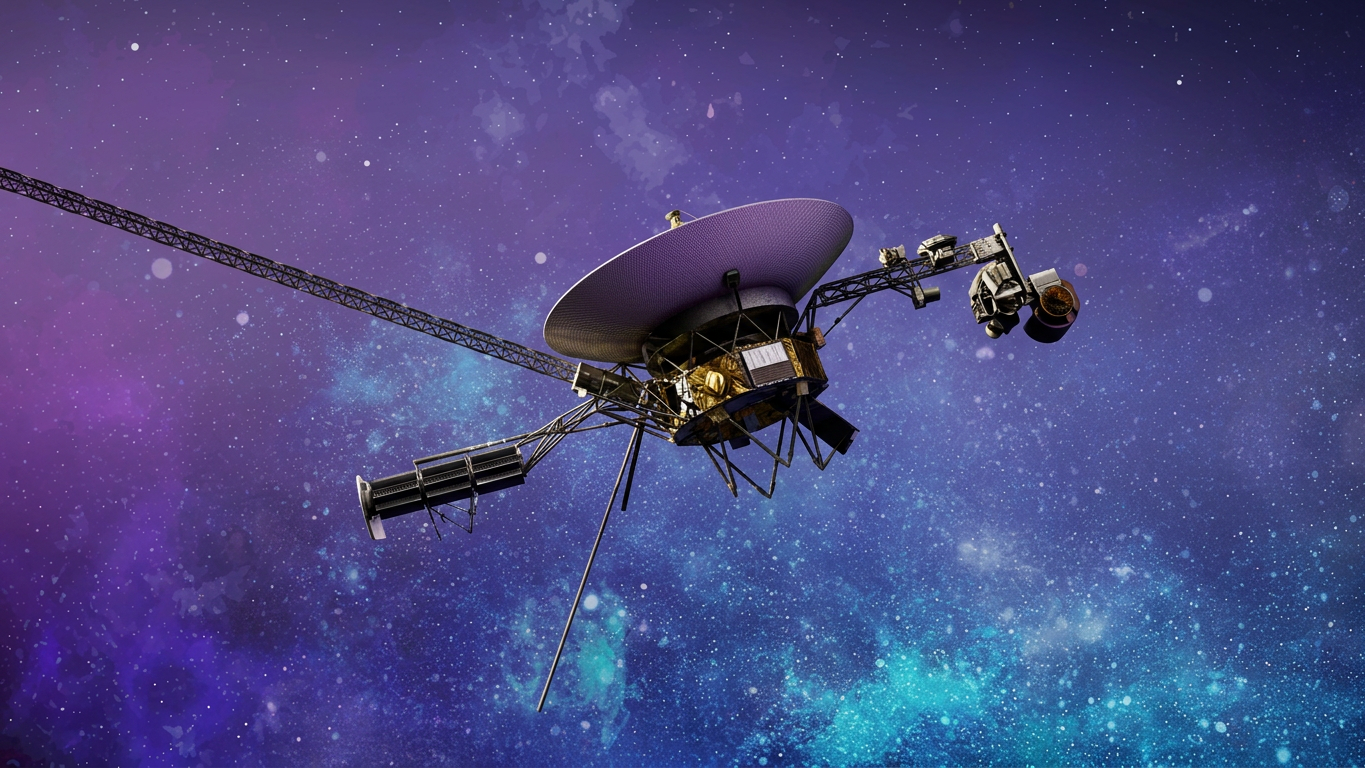
Artist’s concept of Voyager 1 travelling through interstellar space beyond our solar system. Image Credit: NASA/JPL-Caltech
NASA Voyager 1 Shuts Off Instrument: The Decision That Could Keep Humanity's Farthest Traveller Alive
Introduction: A Moment 49 Years in the Making
On April 17, 2026, engineers at NASA's Jet Propulsion Laboratory made a decision that no one wanted to make but everyone knew was coming. They sent commands across 15 billion miles of space to shut off one of Voyager 1's last remaining science instruments. That instrument, the Low-energy Charged Particles experiment, or LECP, had been running almost without pause since Voyager 1 launched back in 1977. Nearly five decades of uninterrupted science. And now, silence from one of its most important sensors. This is not just a story about space news or a routine NASA update. This is a story about survival, sacrifice, and the extraordinary lengths scientists and engineers go to keep a piece of human history alive at the very edge of our solar system. Understanding what happened and why matters to anyone who cares about nasa science, space research, and the future of human exploration beyond our heliosphere. NASA Voyager 1

What Is NASA Voyager 1 and Why Should You Care?
Voyager 1 is the most distant human-made object ever to exist. Launched by NASA in 1977, it has spent nearly half a century travelling away from Earth at roughly 38,000 miles per hour. Today, it sits more than 15 billion miles away, well beyond the boundaries of our solar system and deep inside what scientists call interstellar space. No other spacecraft has ever been this far. No other mission has ever sent back data from this region of the universe. That makes every signal Voyager 1 transmits back to Earth genuinely irreplaceable.
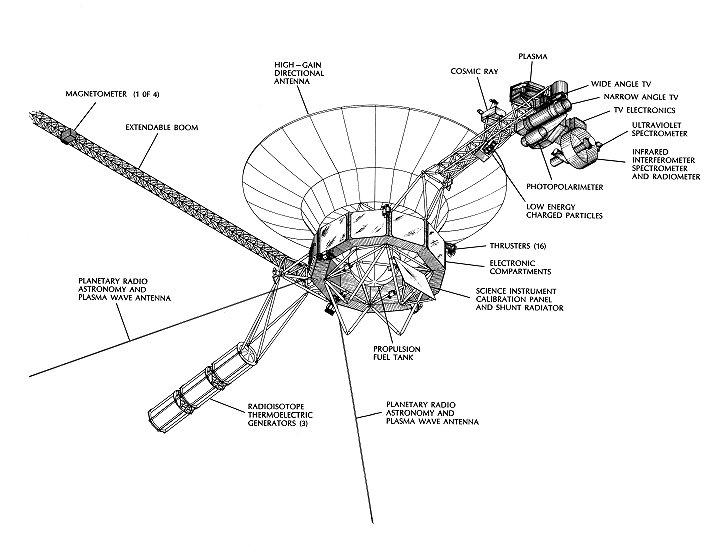
Detailed diagram of Voyager 1 showing its scientific instruments and structure Image Credit: NASA
Close view of the LECP instrument used on Voyager 1 and Voyager 2 Image Credit: NASA
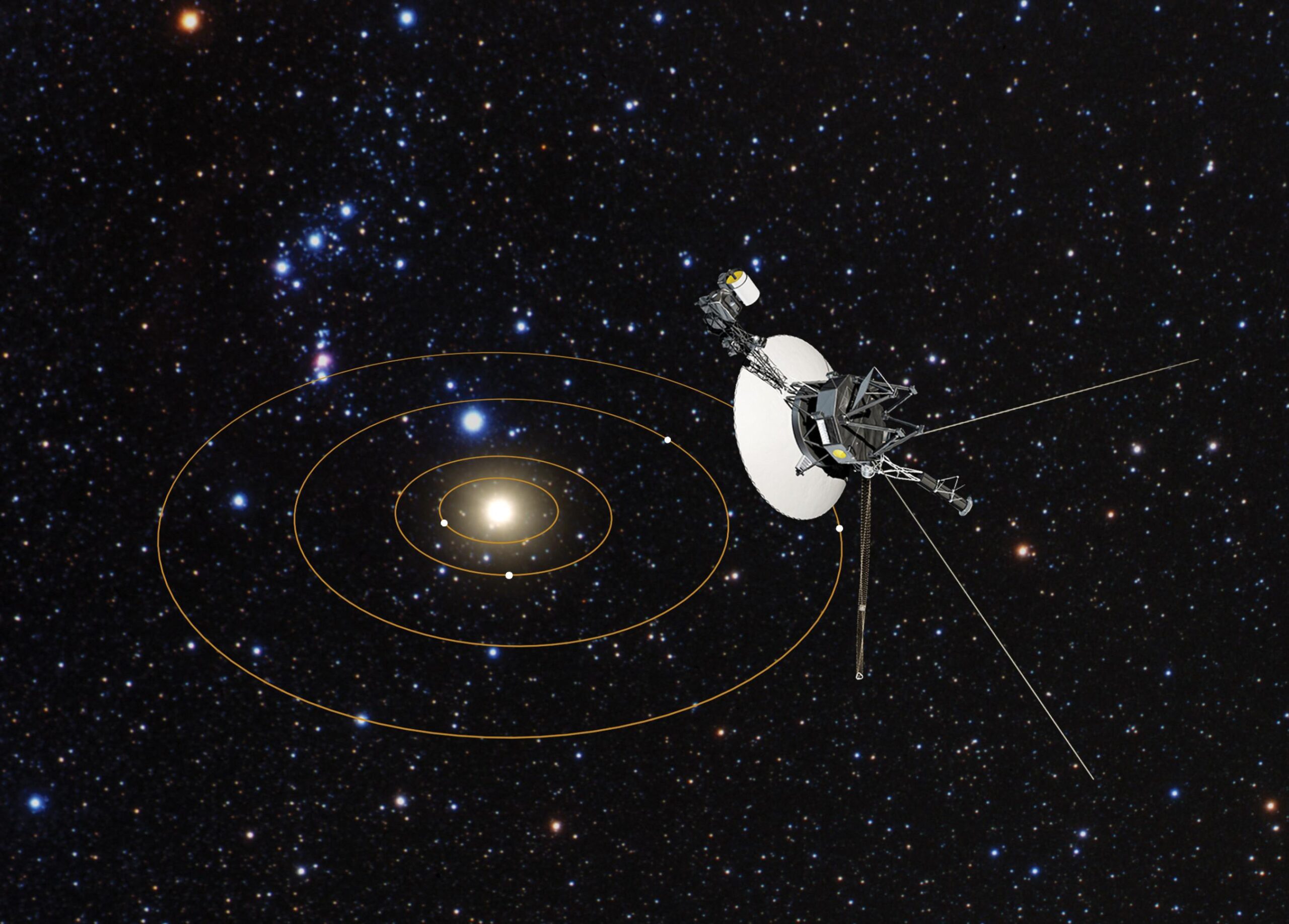
The Significance of Interstellar Science
The data Voyager 1 collects does not just satisfy scientific curiosity. It actively shapes how humanity understands the structure of space beyond our sun's influence. The region Voyager 1 now occupies, the interstellar medium, is filled with cosmic rays, charged particles, and pressure fronts that cannot be studied from Earth or by any other spacecraft currently in operation. The LECP instrument played a central role in mapping this invisible architecture of deep space. It measured ions, electrons, and cosmic rays, giving scientists a window into the dynamic forces at play beyond our heliosphere. Losing it changes what the mission can tell us, but it does not end the mission.
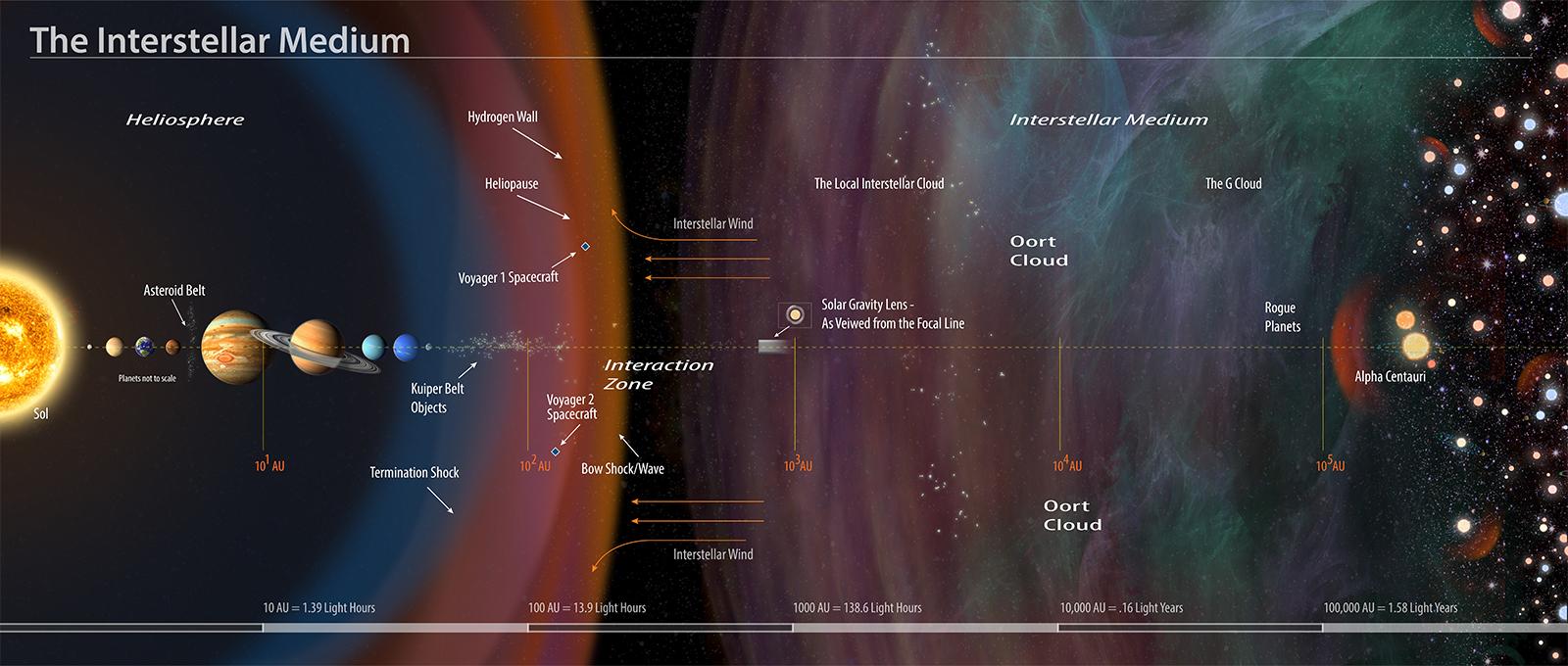
Diagram showing Voyager spacecraft traveling beyond the heliosphere into interstellar space.Image Credit: NASA/JPL-Caltech
Why NASA Had to Shut Off the LECP
Voyager 1 is powered by a radioisotope thermoelectric generator, a device that converts heat released by decaying plutonium into electricity. This is the same power system that has kept the spacecraft running for nearly 50 years. But it comes with an unavoidable limitation. Both Voyager 1 and its twin, Voyager 2, lose roughly 4 watts of power every year. Four watts might sound trivial, but in deep space, on a spacecraft running on extremely limited energy, those watts are the difference between survival and shutdown. After almost five decades, the power margins have become dangerously thin.
The February Warning That Changed Everything
During a routine manoeuvre on February 27, Voyager 1's power levels dropped unexpectedly. Engineers immediately recognised the danger. If power dipped any further, the spacecraft's built-in fault protection system would automatically begin shutting down components to protect itself. That kind of forced shutdown can take weeks or months to recover from, and recovery itself carries serious risks for a spacecraft 23 light-hours away from Earth. The team could not afford to let that happen. They had to act before the spacecraft acted for them.
A Decision Made Years in Advance
What makes this moment fascinating is that NASA did not scramble to figure out what to do. The Voyager science and engineering teams had sat down years ago and agreed on a precise shutdown sequence. Out of the 10 original instrument sets on each spacecraft, seven had already been turned off on Voyager 1. The LECP was simply next on the list. This kind of long-range planning reflects the depth of expertise and foresight behind the Voyager mission. It is not reactive crisis management. It is methodical, deliberate stewardship of a once-in-civilisation scientific asset.
What Happens When a Signal Takes 23 Hours to Arrive
Here is something that rarely gets discussed in space news coverage: the sheer logistical reality of managing a spacecraft this far away. When engineers at JPL sent the shutdown commands to Voyager 1, those commands travelled at the speed of light. And they still took approximately 23 hours to reach the spacecraft. The shutdown process itself took around three hours and fifteen minutes to complete. That means the team had to design and send a command sequence that would execute correctly, autonomously, and without any possibility of real-time intervention. If something went wrong, the team would not know for nearly a day. This is the quiet heroism behind nasa science and deep space operations that most people never consider. Every decision is made with full awareness that there is no undo button.
What Voyager 1 Can Still Do
Despite the LECP shutdown, Voyager 1 remains scientifically active. Two instruments continue to operate. The first listens to plasma waves in the interstellar medium. The second measures magnetic fields in the space beyond our solar system. Both are functioning well and continue to send back data from a region no other spacecraft has ever reached. Kareem Badaruddin, the Voyager mission manager at JPL, captured the team's mindset precisely when he noted that the remaining instruments are still working great and sending back data from a region of space no other human-made craft has ever explored. The mission continues. The science continues
A Small Motor That Could Make a Big Difference
Here is a detail buried in the official NASA update that deserves far more attention. When engineers shut down the LECP, they chose to keep one small component running: a tiny motor that spins the sensor so it can scan in all directions. This motor draws only 0.5 watts of power, almost nothing. But by keeping it running, the team preserves their ability to potentially switch the LECP back on someday if they find additional power savings elsewhere. It is an extraordinarily thoughtful hedge against an uncertain future, a small act of hope measured in half a watt.
The Big Bang: NASA's Ambitious Plan to Buy More Time
Shutting off the LECP buys Voyager 1 roughly one year of additional breathing room. But the team at JPL is not simply waiting out that time. They are working on a far more ambitious energy-saving overhaul they have internally nicknamed the Big Bang. The plan involves swapping out an entire group of powered devices simultaneously, turning some off completely and replacing others with lower-power alternatives. The goal is to keep both Voyagers warm enough to continue operating while freeing up enough power to sustain their remaining science instruments for as long as possible.
Voyager 2 Goes First
The Big Bang will be tested on Voyager 2 first. There are two reasons for this choice. Voyager 2 has a slightly larger power reserve, giving engineers more margin for error. It is also closer to Earth, which means the team can communicate with it more quickly and recover faster if something goes wrong. Tests on Voyager 2 are planned for May and June 2026. If those tests succeed, the team plans to apply the same fix to Voyager 1 no earlier than July. A successful Big Bang on Voyager 1 could even allow the LECP to be switched back on, restoring a science capability that was never meant to be lost permanently.
Why This Matters Beyond the Headlines
It is easy to read about a spacecraft shutting off an instrument and move on. But the deeper significance of this moment in space research deserves reflection. Voyager 1 and its twin are the only human-made objects that have ever left our solar system. They are the only sources of direct, in-situ measurements of the interstellar medium. Every year they remain operational, they fill a scientific gap that no future mission can close retrospectively. Data from 2026 cannot be recreated in 2040. The measurements being taken right now, in real time, are building a picture of the universe that will inform space research for generations. The fact that a team of dedicated engineers and scientists is going to such extraordinary lengths to keep these spacecraft alive is not just a technical story. It is a story about what humanity values and what we are willing to fight for.
Unique Insight: The Emotional Economics of Deep Space Management
There is an aspect of missions like Voyager that the official nasa.gov updates rarely articulate. Managing a spacecraft that is nearly 50 years old, unimaginably far away, and slowly dying of energy starvation requires something that cannot be found in any engineering manual. It requires a team that has emotionally invested in an object they will never see and can never touch, communicating through radio waves that take nearly a day to travel one way. The engineers who work on Voyager today were not alive when it launched. They inherited the mission the way one inherits a family heirloom, with a deep sense of responsibility to preserve something irreplaceable. That emotional dimension shapes every decision, including the choice to keep a tiny 0.5-watt motor running on the LECP so the door is never fully closed. It is not just engineering. It is care.
Conclusion: The Last Great Journey Continues
NASA's decision to shut down the LECP on Voyager 1 is both an ending and a beginning. It marks the loss of a scientific capability that operated for nearly half a century. But it also opens the door to a future where a carefully planned energy strategy might extend this extraordinary mission for years more. Voyager 1 is still out there, still listening, still measuring, still sending back whispers from the edge of everything we know. As long as it has power, it has purpose. And the team at JPL are doing everything in their considerable expertise to make sure that power lasts as long as possible. For anyone who follows NASA science, space research, or trending space news, this is a story worth understanding fully. It represents the best of what human curiosity and engineering ingenuity can achieve together, across distances that would have seemed impossible to our ancestors. The universe is vast and indifferent. But for nearly 50 years, a small golden spacecraft has been teaching us its secrets. That conversation is not over yet.